
A Day in the life of an Environmental Consultant – Summer 2023

water meadows
As I await the arrival of Storm Ciaran on a wet November day, it is good to look back and reflect on a summer of river surveys for the Lower Medway Internal Drainage Board.
If I am to be honest then I felt a little pessimistic about the survey season ahead after completing the desk study for the 22 channels I planned to visit. Flying back in time across the landscape using Google Earth revealed a picture of endless loss. Marshes, meadows and orchards had vanished to make way for industrial estates and housing. Worse still, much of this loss had happened during my lifetime while I had been working in conservation. It made me feel personally responsible, as if somehow I had let the ball slip through my hands during my watch. I imagined a summer unearthing sad little rivers lost to urban sprawl and polluted run off.

Rubbish dumped beside a stream
However, I’m glad to say that, for the main, my experience was very positive. That’s not to say the loss wasn’t there or that I didn’t encounter unbelievably high phosphate levels, illegal dumping of waste, unchecked run off from intensive maize fields and streams entombed in culverts. All of this was out there but I also delighted in water meadows alive with colour and bee buzz, tussocky margins swarming with emerald damselflies and skies full of hunting housemartins, showing that nature hangs on and can recover.
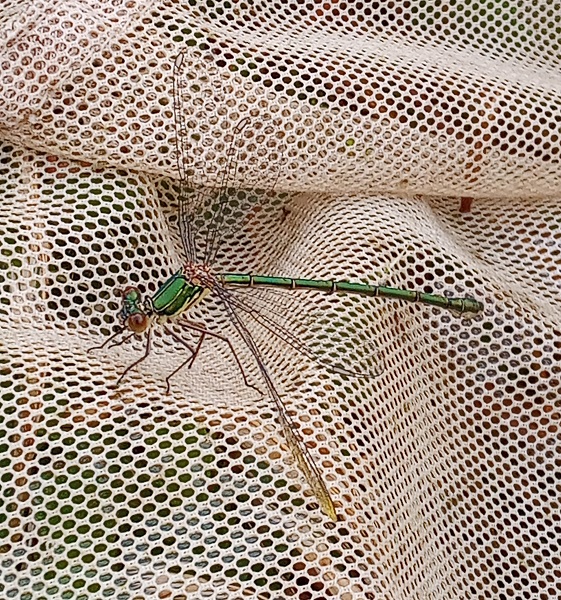
emerald damselfly
Even more heartening is the feeling that there is a chance to do something to improve the situation. I have now submitted all my survey results to the Lower Medway Internal Drainage Board along with a list of priority projects. These range from working alongside other agencies to reduce pollution from the worse offenders and improving access to eels through sluice structures, to projects where the IDB team can provide direct benefits in reducing weed cuts and installing woody debris. The summer has left me, once again, full of enthusiasm to turn back the clock and reverse some of the damage we have done.
Away from the rivers I continued to work with farmers across North Kent. I was delighted to see the first solar pump installed on a farm on Conyer, a project funded by the Lower Medway IDB. Breeding lapwing have been slow to return to this landscape and the pump is a good first step in creating wet spring conditions to encourage prospecting waders to breed. I also worked with tenants of the Church Commission to discuss restoration plans being submitted as part of the RSPB’s Species Survival Fund Project and had a very productive meeting with the RSPB and Natural England to ensure joined up working for waders across farms in which farm clusters and conservation grazing provoked lively discussion.

Surface water flooding like this provide a mecca for breeding waders.
This autumn sees the first meeting of the fledgling Hoo Peninsula farm cluster and I look forward to working together to achieve more for wildlife in this important corner of Kent.


About Post Author


