

Ecology News – Spring 2025- Turtle Doves rediscovered on Hoo Peninsula.
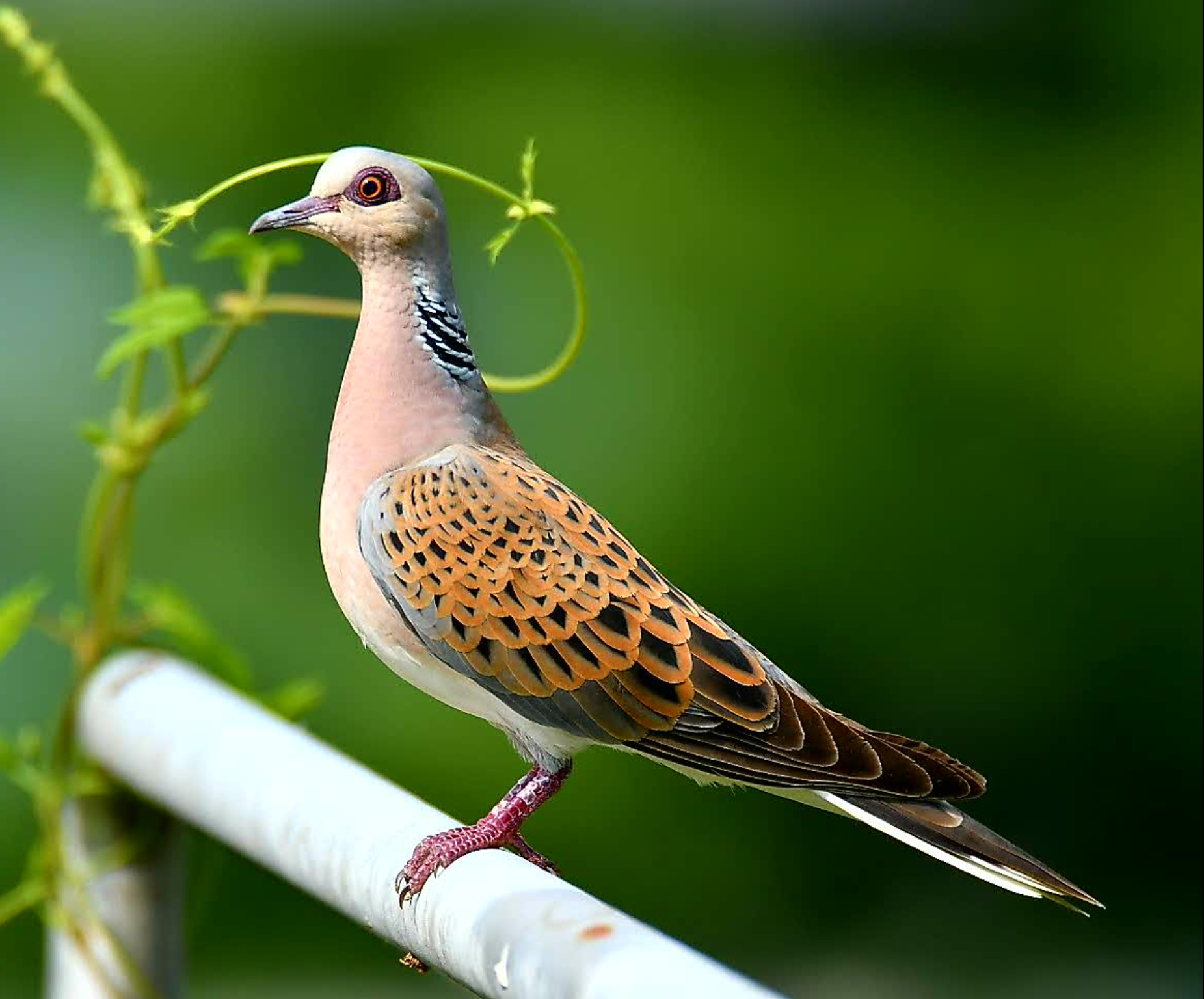
Turtle Doves rediscovered on Hoo Peninsula
image @Caludio Danesi
Turtle doves have been rediscovered on the Hoo Peninsula after an absence of many years.
Back in 2004 I worked at the RSPB Northward Hill Reserve near Cooling on the Hoo Peninsula in North Kent. I remember the allusive turtle doves purring from within the scrub, frustrating bird watchers as they tried to get a glimpse of this beautiful dusty pink dove with a fan of turtle shell colours on its wing. After the visitors left, the birds would appear, to sit on the telephone wires and feed alongside the reserves tracks. They were never present in great numbers but they were there. Then they vanished.
The turtle dove has suffered a catastrophic 99% decline in numbers since the 1960’s. They were hit with a double whammy of human shaped trouble. Firstly there was intensive agriculture which caused a loss of scrubby corners, wild flower strewn field edges and small ponds; the three components that turtle doves need to find when they first return from their migrations from West Africa. Then they were being shot in unsustainably high numbers as they migrated over Europe. This meant that the birds who survived the guns, starved on reaching Britain.
Turtle dove were thought to have gone locally extinct as a breeding birds on the Hoo Peninsula and no birds had been recorded at Northward Hill Reserve for several years. Then, during a meeting of the Hoo Peninsula farm cluster back in December, one of our members said that he had seen turtle doves on his land and another said, he had a photo of one beneath his garden bird table. The birds were clearly back.

Operation Turtle Dove Conservation Officer Nicole Khan talks to farmers at a Hoo Peninsula Cluster meeting
This spring Operation Turtle Dove Conservation Advisor, Nicole Khan came along to our spring Cluster meeting to talk to farmers about managing land for these birds. We visited land belonging to local farmer John Myatt and discussed ways he could encourage the birds by planting seed mixes alongside his tracks and improving access for the birds to his farm reservoir. Nicole offered to provide a select group of farmers with free turtle dove seed so that birds returning from Africa could have something to eat straight away.
Nicole also explained that turtle dove have had a 40% increase in numbers in recent years after a reduction in shooting of birds migrating was agreed in 2021. “We are getting land turtle dove ready,” she said, With this in mind, Nicole has agreed to conduct farm visits on the Hoo Peninsula and provide more seed next year.

Simon Osenton receives his turtle dove seed.
Later in the month I was delighted to deliver the first batch of seed to farming brothers Simon and Mark Osenton who have been putting out water, feeding the birds and gapping up hedgerows on their land in recent years and hope to do more in the future.
Without the farm cluster and farmers talking together about wildlife it feels as if this project would not have got off the ground and illustrates the benefits of the cluster to farmers and wildlife.
Another positive piece of news this month was a day out in the field with the Upper Medway Internal Drainage Board team. I was delighted to see that, since our workshop last year on installing woody debris in rivers, the team have taken the lessons on board and had done an excellent bit of work in a channel to create pinch points and install woody deflectors to re-instate meanders. I am always blown away by the excellent attitude and enthusiasm of the drainage boards team.
There was more good news from Conyer Marshes where I discovered three lapwing chicks on land belonging to the Dixon family. I have worked with this family for 10 years to advise on managing the marshes for waders but, for many of these years, they were fighting a lone battle and isolated from other wader sites. In recent years the Conyer Marshes have been transformed with sites either side of the Conyer creek undertaking wetland restoration work with much more to come this autumn.
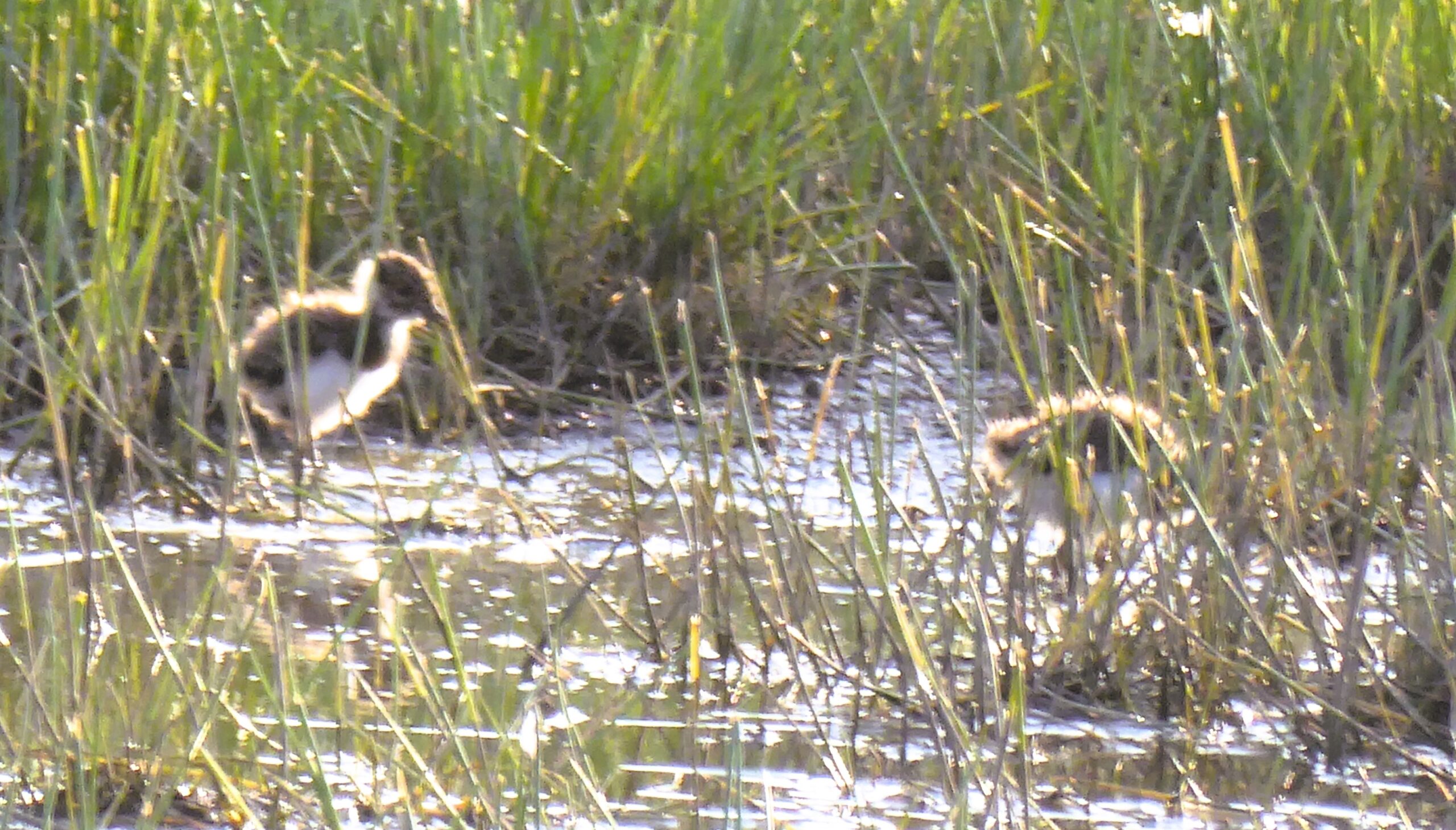
Lapwing chicks on the marshes at Conyer.
To finally be able to send these farmers pictures of chicks on their land felt like a reward for all their years of flying the flag for waders and their perseverance to keep doing the right thing for wildlife.
However, overall this spring has been hard for our wetland birds. It has been the driest spring in 50 years and this is bad news for wader chicks who need muddy margins which contain high numbers of fly larvae which birds like lapwing feed on. Many sites I work on were bone dry by mid April when survey’s began. Farms rarely have the sophisticated water control available to managers of nature reserves and rely on high winter rainfall to create the wet splashy conditions which waders need.
Overall, while some sites saw increases in lapwing and redshank pairs, numbers of fledged chicks are way down on previous years. Many farmers I work with are keen to do more and funding has been allocated to help 4 farms but it is frustrating to have to continuously tell farmers that there is currently no money available to help wildlife on their land because of the continuous stop start of the Governments Countryside grant schemes and no current landscape scale funding schemes available.
Many farmers hoped that the Biodiversity Net Gain scheme, which is supposed to offset the loss of habitat through development by enhancing habitat either on development sites or elsewhere, would fund work on their land but this has failed to live up to expectations. Developers have somehow managed to convince planners that they are adding wildlife value to sites they build on by putting up a few bat boxes and creating a pond. Our planning system is in desperate need of reform to create low cost and social housing and help our beleaguered wildlife but I fear that the Government’s planning reforms will not achieve this as the focus seems to be on removing protection for wildlife and buckling to pressure by developers who, if recent efforts are anything to go by, have no interest in building the kind of housing that is needed and instead build homes beyond the reach of people starting out on the housing ladder.
A Nature Restoration Fund is welcome if it helps fund truly great work for wildlife but not if this comes at the expense of the nature that surrounds our towns and cities or the Greenbelt which is so necessary for the mental and physical health of people and their connection to nature. There is also a need to break the link between developers and Ecological consultants. Currently ecological consultants are employed directly by developers. This, I feel, has created a system where Ecologists are pressurised to come up with the results that developers want to hear and cut corners to reduce time and costs on site. I feel that instead developers should have to pay into a central fund which funds independent Ecologists to survey and advise on sites.
Only then will we get mitigation schemes which actually benefit wildlife instead of a box ticking exercise which benefits no one.


About Post Author


