

A Day in the Life of an Environmental Consultant – October 22
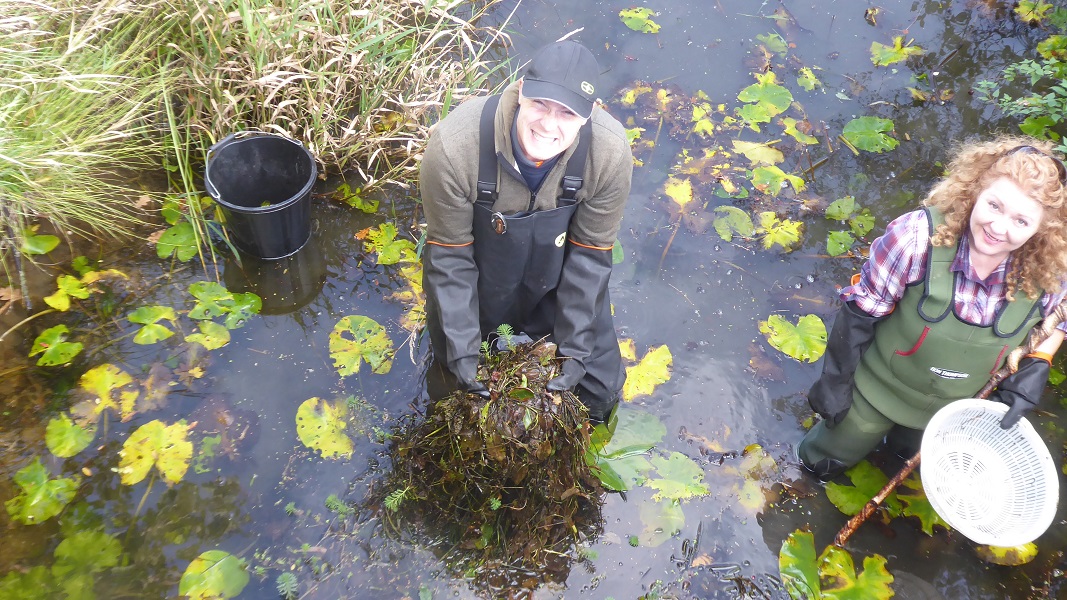
Upper Medway Internal Drainage Board staff member, Paul and I remove invasive parrot feather from the river Sherway
Writing reports is not usually one of my favourite jobs but I confess I have enjoyed spending the last month creating restoration plans for four Kent rivers, managed by the Upper Medway Internal Drainage Board.
I got to live, once again, those hot, sunny days exploring and could dream big plans to restore old meanders to straightened rivers, reconnect wet woodland to the river by lowering banks and stop pollution in its tracks. In my mind’s eye, I saw clean, healthy rivers full of fish and otters.
The ghost of meanders winding their way across the fields of Kent
I know that in reality some of these dreams will be difficult to achieve. Persuading farmers to give up productive land to put back meanders is a hard sell. Persuading farmers that we need to slow flood waters by reconnecting channels to their flood plains is also hard and checking pollution when the Environment Agency is underfunded and under staffed is also a frustrating task but in other areas I do have the power to do some good.
Already I have spent a useful day with the IDB Operations Team removing the invasive plant Parrot’s Feather from the River Sherway near Headcorn. This plant had most likely been dumped from a garden pond into the channel from the Sherway Bridge and had begun to spread downstream. Left unchecked it would grow rapidly and clog the waterway causing potential flooding issues and blocking light from the water causing an eventual collapse of the ecosystem.
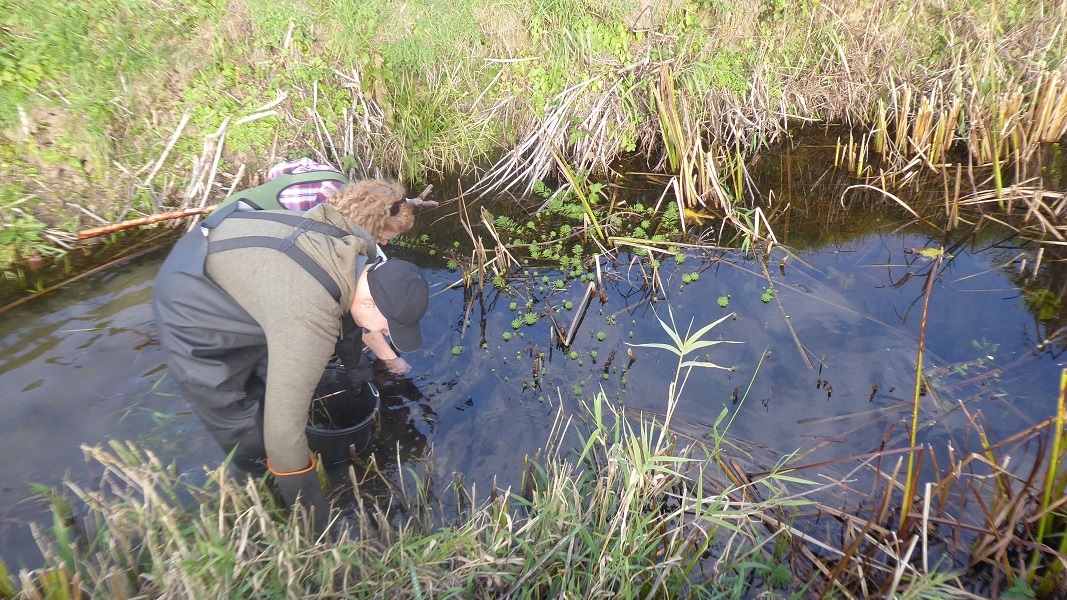
However towards the end of the month, Paul, Jordan and I spent an afternoon fastidiously picking every plant from a 200m stretch of the channel and placing it safely on the bank where it can dry out and not get washed back into the channel during high flows. It was a good opportunity to give the ground staff some in-field training which is far more memorable than classroom based courses and hand outs.
Hopefully the next few months will give me the chance to provide more training for the staff to help them identify bat roost features in old heritage trees, undertake pollarding and install woody debris in channels. This should set the team up nicely for undertaking some of the work to restore the rivers over the next few years.


About Post Author


